


LISBON VALLEY URANIUM ACQUISITION
Overview
- 217 contiguous claims dominating the east flank of Lisbon Valley.
- Agreement with Big Indian Prospectors LLC to acquire uranium claims in San Juan County, Utah.
- Existing road & mining infrastructure accelerated exploration timelines.
- Under-tested structural block with proven regional endowment.
- ~ 78 Mlbs U₃O₈ historical production • Average grade ~0.37% U₃O₈.
- Classic salt-anticline-hosted uranium system.
Geology
-
Historic mining concentrated on west flank of Lisbon Valley anticline.
-
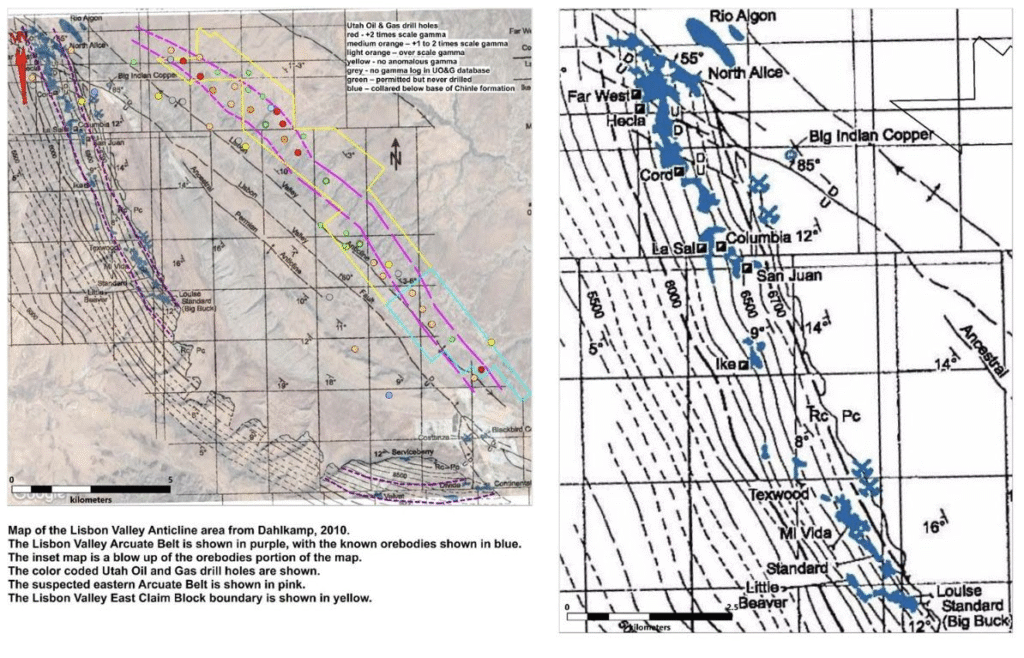
East flank down-dropped ~2,000–2,700 ft along Lisbon Valley fault - under-explored.
-
50+ drill holes of gamma-log data indicates uranium mineralization potential on the east side.
-
Targeting mirror-image mineralization style common in salt-anticline systems.
STRATEGIC OBJECTIVE
-
Systematically test the east belt extension for district-scale uranium discovery potential.
THE BIG INDIAN PROJECT
Overview
-
Mirror-image potential on salt anticlines
Historically in salt anticlines you get equal deposition on both flanks of the formation. This means there should be a mirror deposit on the east flank of similar size and grade to the past produced West flank.
-
What’s been mined
~78 Mlbs U₃O₈ were historically produced from the west side of the Lisbon Valley anticline at strong grades. The east side remains relatively under explored. Why? Because it sits 2,000ft deeper.
-
What's different about the east now
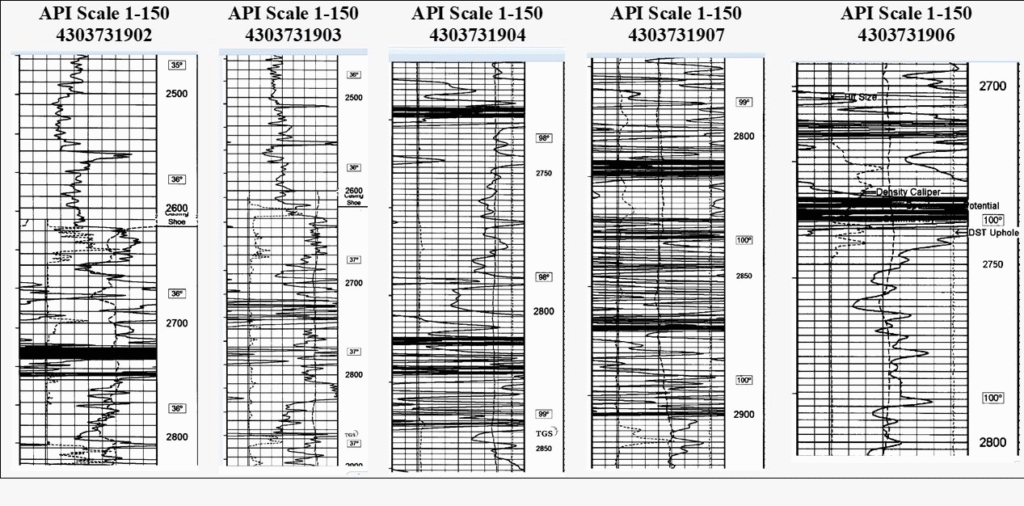
We have extensive gamma logs from prior O&G drillers down to 6,000ft through the target area of uranium mineralization. These logs show up to 10-12x background radiation. Something material is causing that. We believe it’s a uranium deposit.
Our Thesis
We intend to twin drill the existing O&G holes to prove the gamma anomalies are from the long suspected eastern flank deposit.
Why American Atomics
We’ve assembled the land, the data, and the capital plan to systematically test the highest-confidence corridors first.

THE BIG INDIAN PROJECT
KEY ADVANTAGES
-
Dominant land position
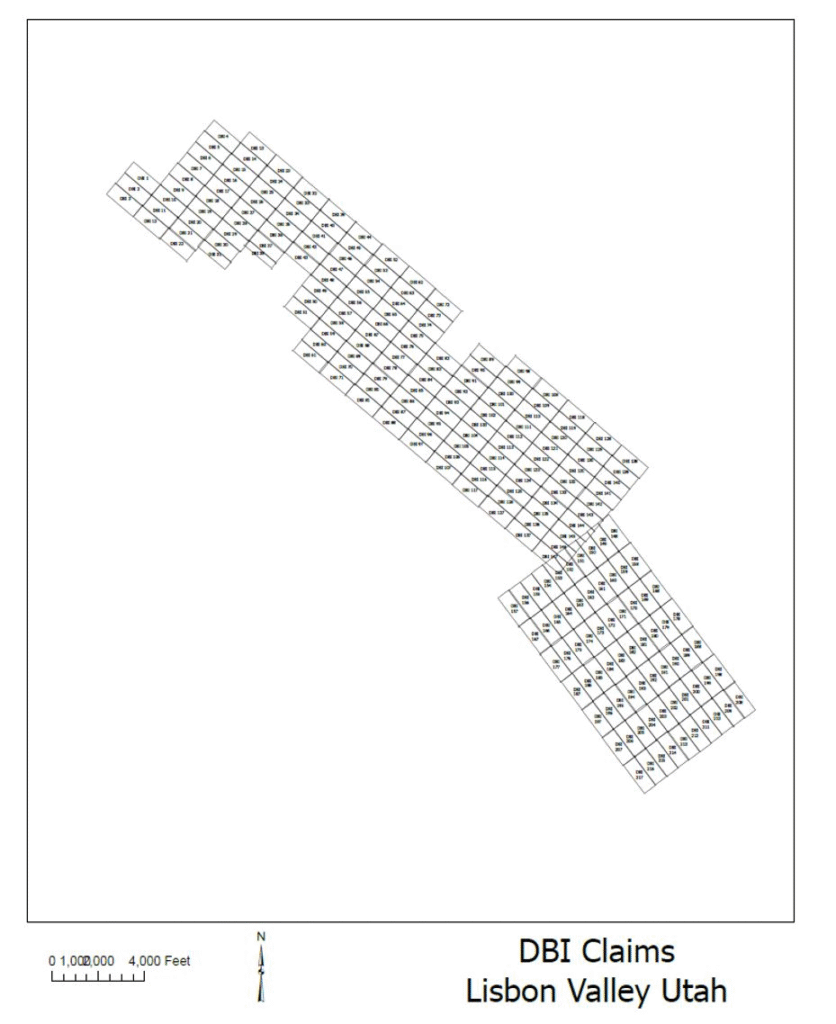
A contiguous claim block covering the vast majority of the east flank—positioned across the most prospective structural and stratigraphic belts.
-
Data-backed targets
Legacy gamma-log anomalies within priority horizons (e.g., Chinle base, upper Cutler) reinforce our east-side deposition model.
-
High-probability vectors
Anticline-parallel faults, relay ramps, fracture corridors, and redox boundaries that mirror west-side ore controls.
-
Catalyst-rich work plan
Rapid integration of logs and historical datasets into a 3D framework → targeted oriented HQ drilling on the best corridors → near-term discovery signals.
THE BIG INDIAN PROJECT
LISBON VALLEY
The American Atomics / Big Indian Prospectors block blankets the east side of the Lisbon Valley anticline, capturing the structural spine, major fault splays, access routes, and the stratigraphic hosts that powered 78 Mlbs of historic production on the west—now ready to be systematically tested on the east.
Technical Report
Lisbon Valley East
43-101 Lisbon Valley East NUKE Final.docx
National Instrument 43-101 Disclosure
The technical information on this web page has been reviewed and approved by Joe Campbell who is a Qualified Persons in accordance with the Canadian regulatory requirements set out in NI 43-101. Readers are cautioned that some of the technical information described on this web page is historical in nature; however, the historical information is deemed credible and was produced by professional geologists/geoscientists in the years discussed.
Newsletters
Interested in staying up to date with the latest company news and developments?
Subscribe to our newsletters.
American Atomics
We’re building the new American nuclear fuel cycle – from rock to reactor.